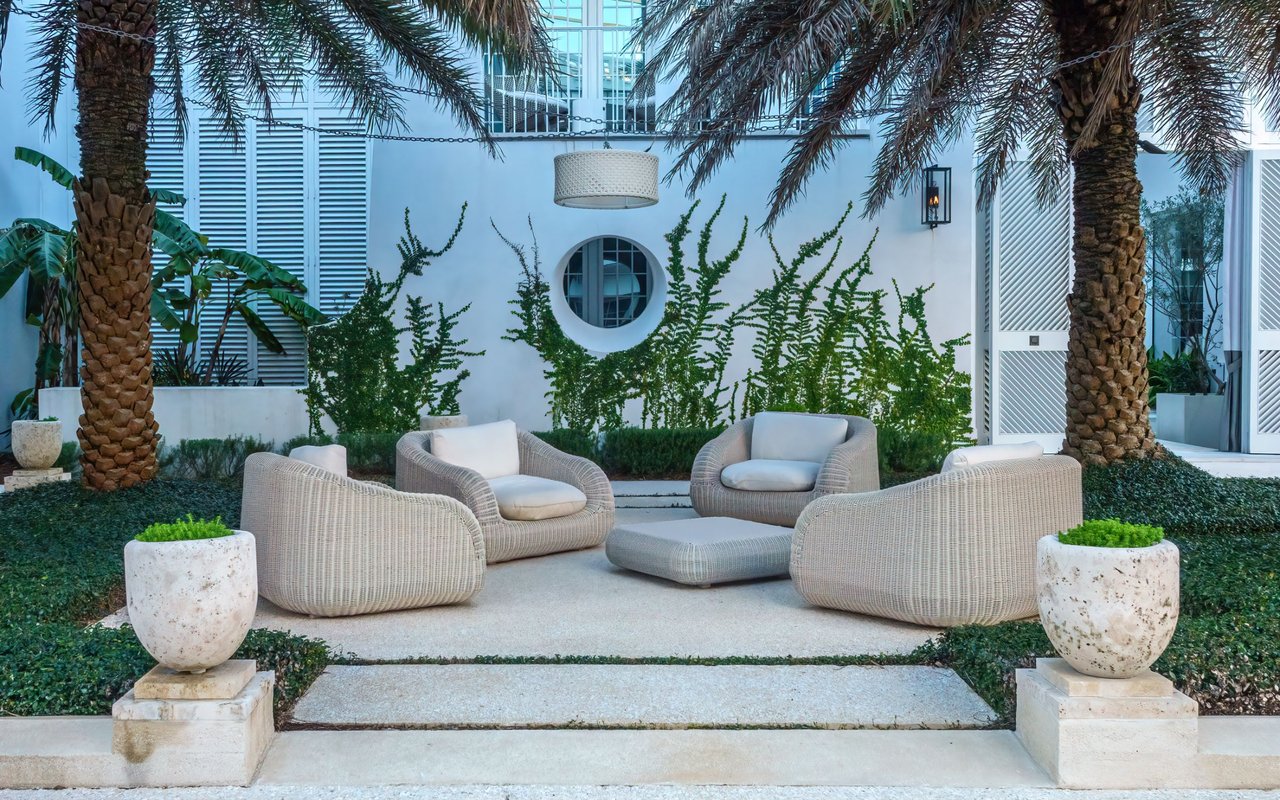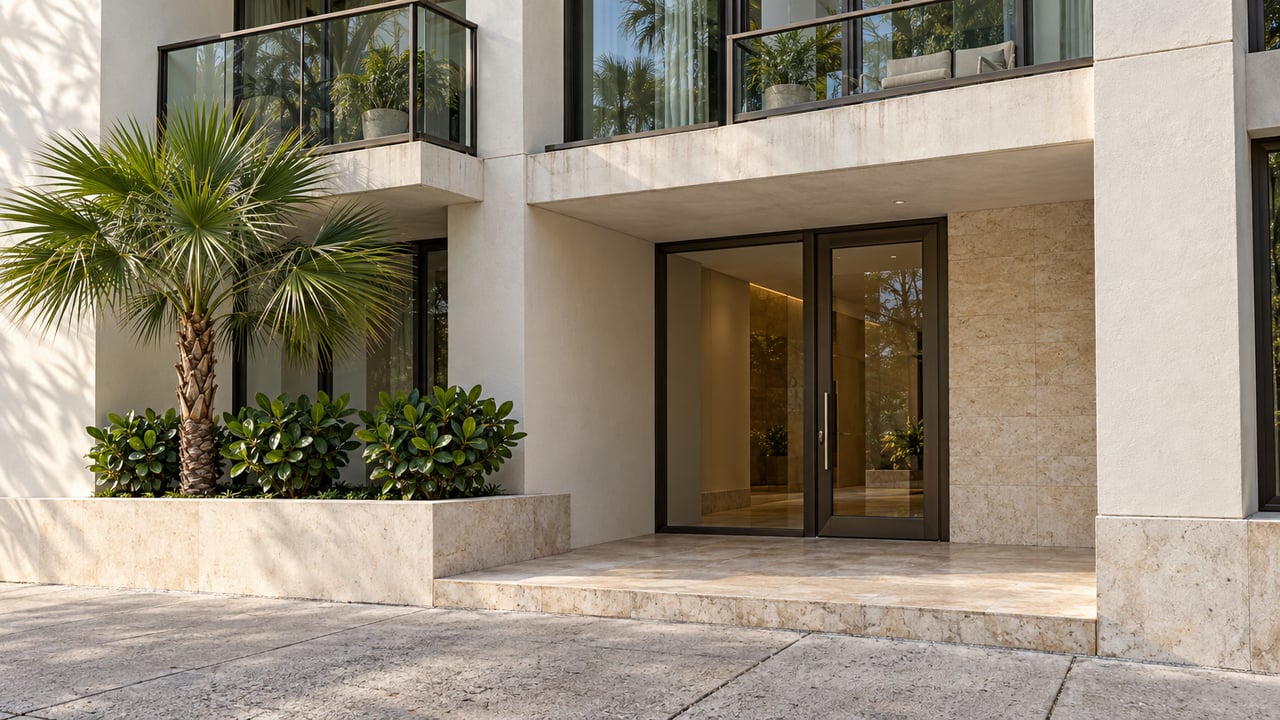
Walk east on Flagler from Biscayne Boulevard on a Saturday afternoon and the street does what five years of press releases promised it would. Curbless brick pavers run wide and even under your feet, string lights hang between renovated storefronts, and a market table selling houseplants and Florida citrus sits where a construction fence used to be. Keep walking past NE 1st Avenue, though, and the sidewalk narrows, the paving stops being new, and by the time you'd reach Miami Avenue you're back in a stretch of the corridor that still doesn't have a finish date. The reopening is real. It's also three blocks long, not five, and knowing exactly where it ends is the difference between a good Saturday and a wasted walk.
Three Blocks Finished, Two Still Waiting on a Contractor
The Flagler Street Beautification Project broke ground in 2021 with a plan to rebuild all five blocks between Biscayne Boulevard and Miami Avenue into a curbless, festival-ready corridor: new drainage, new electrical, wider sidewalks, LED lighting. The pandemic delayed it. Underground utility problems delayed it again. Then a dispute with the original contractor stalled the westernmost blocks for the better part of two years while merchants worked behind barricades that, by their own account, didn't move for long stretches at a time.
Sections A and B, from Biscayne Boulevard to NE 2nd Avenue, reopened to traffic in the second half of 2025. Section C, extending the finished stretch to NE 1st Avenue, opened at a ceremony on March 4, 2026, where Mayor Eileen Higgins and city project manager Jose R. Perez marked the milestone at the corner of Flagler and NE 1st. Perez put the total project budget at roughly $31.6 million, funded jointly by Miami-Dade County, the Downtown Development Authority, area property owners, and the city, and said the number should hold even as the last two sections finish.
Those last two sections are Section D, running from East 1st Avenue to Miami Avenue, and Section E, the final stretch to West 1st Avenue near the courthouse. As of the most recent public reporting, the city had not announced a confirmed contractor for the remaining work, let alone a completion date. City Commissioner Damian Pardo's office has said the city is waiting on guidance from the bonding company on who finishes the job. Until that changes, the honest map of Flagler Street is the eastern three blocks, Biscayne to NE 1st Avenue, functioning the way the whole corridor eventually will, and the two blocks west of Miami Avenue that are still a construction zone with no public timeline.
What's Actually Worth Walking To
Inside those three finished blocks, the corridor's food and retail scene has filled in faster than the concrete work suggests. Julia & Henry's, the multi-level food hall built into a century-old building at 200 East Flagler that once housed a Walgreens, has been open since 2023, not a still-pending project the way some older coverage of the street implies. It runs close to two dozen food and drink vendors across several floors, built around a soaring atrium, with local lore holding that the basement once operated as a speakeasy during Prohibition. Whatever the building's earlier chapters, it's been the corridor's anchor for three years now, not a landmark residents are still waiting to see fill in.
A few blocks north in Miami Worldcenter, Maple & Ash brought in a two-story steakhouse, the kind of dim, decadent dining room downtown didn't really have five years ago. Closer to the finished stretch, Chapola runs as a small cafe inside one of the residential towers, serving coffee, matcha, and pastries to a downtown population dense enough now to support that kind of footprint. And on NW 1st Street, Tâm Tâm has become one of the restaurants people specifically plan a night around, built on the concept of quán nhậu, Vietnamese for gathering over food and drinks rather than sitting through a formal meal.
The businesses that predate all of this construction are still there too, and they're the ones who can tell you what the last two years actually felt like. Sneak Peek Luxury and Miami Discount Center, both a half block south of Flagler on Southeast 1st Avenue, spent nearly two years watching their intersection stay closed while barricades sat in front of their doors. Bespoke BarberPub, inside the finished stretch, is already feeling the difference on weekend nights.
"It's very noticeable," Bespoke BarberPub barber Rocio Cano told CBS News Miami about the change in weekend foot traffic since the street reopened.
The Street Has a Weekend Personality, Not a Weekday One Yet
What's easy to miss from a single Saturday visit is that Flagler's revival is scheduled, not constant. The Flagler District Business Improvement District runs a recurring weekend cycle: Friday Street Stages and BarberPub Disco, Saturday's Green Market alongside evening Street Stages, and Sunday's Vintage Market, also known as Magic City Flea. The Green Market is running weekly through the fall, with a Saturday date confirmed for September 19, and the Vintage Market has a Sunday date confirmed for September 13. A Downtown Miami Art Walk, a separate monthly event, is scheduled at 125 East Flagler on September 18.
That weekend density covers for a weekday gap the BID itself has documented. An April 2026 report from the Flagler District BID found that 80 percent of the empty retail space across the broader Downtown-Brickell area sits specifically within the Flagler District, a legacy of years when construction fencing made storefronts hard to reach on foot. Sneak Peek Luxury's Daniel Cohen has pushed organizers to showcase the stores that are still open on the street rather than let attention concentrate on the busiest blocks and nights. Other longtime merchants have said the weekend entertainment draws a crowd but hasn't yet moved weekday sales, and they've asked for more direct inclusion in the official programming instead of hoping the Saturday crowd spills over.
If you live downtown, the practical read is simple. Flagler on a Tuesday afternoon and Flagler on a Saturday evening are not the same street, and planning around the scheduled market days will get you a much better sense of what the corridor has become than a random weekday walk-through will.
A Century-Old Landmark the Street Hasn't Solved Yet
Even inside the finished blocks, Flagler is still sitting on one unresolved piece of its own history. The old Miami-Dade County Courthouse at 73 West Flagler, a 28-story neoclassical tower completed in 1928 that was once the tallest building south of Baltimore, has stood empty since the county moved into a newer courthouse. The county has been trying to sell it, and its most recent attempt is an online auction through GovDeals that got nearly 50,000 views in its first weeks with zero bids, prompting the county to extend the process into a second round. An earlier private offer from developer Russell Galbut, worth $33 million in cash plus a land swap the county valued at $20 million, fell short of the county's $53 million ask and was rejected.
The building sits directly across from the Gusman Center, the former Olympia Theater that opened at 174 East Flagler in February 1926 and is marking its hundredth year in that same building in 2026. One structure just found new life through a streetscape grant and a food hall. The other, protected by its historic status from the kind of redevelopment that reshapes most aging Miami buildings, is still waiting for county commissioners to figure out what happens next.
That contrast is the corridor in miniature this fall. Some of Flagler's oldest architecture is exactly what makes the finished blocks worth walking, and some of it is still an open question the street's makeover hasn't touched. Both are true on the same three blocks, at the same time, right now.
If you're weighing whether downtown Miami living fits the way you want to spend your weekends, Maria Penalver knows this corridor block by block and is always up for a conversation about what's actually happening on the ground here.